Build a kit around the route ahead

Backcountry hardware is only as competent as the terrain analysis that preceded it. Before weighing grams or debating fabrics, evaluate topographic exposure, water intervals, expected wind vectors, and the distance to medical rescue.

REVIEW THE KIT SEQUENCE
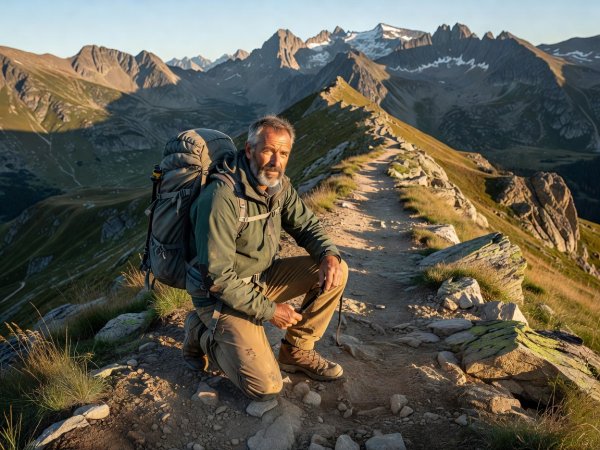
Experienced hiker inspecting a technical backpack on an exposed alpine trail under morning light
Sourced Kit Rules
  • Carrying over 25% of body weight degrades foot placement cadence and increases joint impact by up to 34% on steep descents. Source: Wilderness Medical Society Ergonomics Study
  • Lithium cell output drops up to 60% at sub-zero temperatures, rendering multi-function touchscreens intermittent without insulation. Source: Mountain Rescue Association Cold Weather Briefing
  • Non-freestanding shelters save 30% pack volume but depend entirely on stake anchor strength in frozen or scree soils. Source: Alpine Club Technical Shelter Notes
01

Read the demands first — route and weather context

A high-latitude traverse demands a completely different equipment architecture than a canyon rim route. True durability is matched resilience, not universal over-engineering.

Terrain
Topographic Exposure & Scree
High passes require stiff pack frame transfers and carbon trekking pole tips capable of locking into loose granite fractures without deflection.
Atmosphere
Sustained Precipitation & Gusts
High humidity combined with wind strips body heat five times faster than dry freezing air. Rain shells must breathe without water vapor rebound.
Isolation
Evacuation Horizons
If self-evacuation spans more than 48 hours, redundant satellite uplinks and field-serviceable stove pumps move from optional to essential.
02

Carry only what earns its place — packs and poles gateway

Your pack frame transfers dynamic force directly into your pelvic girdle. Weight reduction is pointless if suspension geometry fails under multi-day water loads.

Internal
Circumferential Frame Struts
Aircraft-grade 7075 aluminum stays isolate torsional twist while maintaining load contact on unmaintained off-camber paths.
Fabrics
Ultra-PE & Cordura Laminates
Woven high-molecular-weight polyethylene resists jagged limestone abrasion where standard nylon face fabrics shear instantly.
Stability
Three-Section FlickLock Poles
Trekking poles absorb downhill knee shock and function as vertical primary uprights for lightweight shaped tarps.

EXPLORE CARRY SYSTEMS

03

Make shelter decisions early — lightweight shelter gateway

Shelter choice is governed by soil density, tree-line boundaries, and ambient wind speed. A catastrophic pitch failure in sub-freezing rain creates immediate hypothermia.

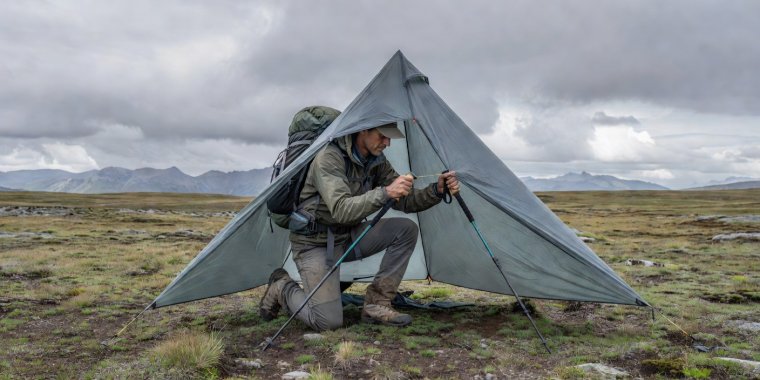
Backpacker securely pitching a silnylon pyramid shelter using trekking poles on high plateau
Pyramid shelters distribute high crosswinds symmetrically, but depend on rock deadman anchors when staking into frozen ground.
Pyramids
Single-Center-Pole Mid Shelters
Exceptional wind shedding geometry; requires no specialized poles if using dual trekking poles linked with an aluminum sleeve.
Freestanding
Geodesic Double-Wall Domes
Heavier footprint, but reliable when camping directly on slickrock or frozen ledges where stakes cannot penetrate.

COMPARE SHELTER ARCHITECTURES

04

Keep your position knowable — navigation gateway

A single screen is a single point of failure. Modern GPS units deliver pin-point orientation, but wet glass, cold batteries, and satellite geometry can blind digital systems without notice.

Primary
Dual-Frequency GNSS Receivers
L1 and L5 band reception prevents canyon signal multipath reflection where cliffs distort standard positioning.
Backup
Declination-Adjusted Baseplate Compass
Requires no battery voltage, operates flawlessly at -40°C, and pairs directly with 1:24,000 scale topographical paper sections.

STUDY NAVIGATION PROTOCOLS

05

Plan for failed assumptions — weather protection and communication gateway

Emergencies occur when minor oversights compound into cascading failures. Satellite messengers provide critical extraction links, but rescue teams require hours or days to navigate severe weather.

Satellite
Two-Way Iridium Communication Terminals
Enables real-time dialog with coordinators to clarify whether injury requires evacuation or if trail conditions have blocked exit passes.
Thermal
Vapor Barrier Bivy & Storm Shells
Compact aluminized bivy sacks trap trapped convective heat when an immobilized companion cannot maintain metabolic warmth.

REVIEW EMERGENCY RESILIENCE

06

Check the unanswered details — FAQ

Specific operational decisions addressed before crossing the trailhead boundary.

Can a smartphone replace a dedicated handheld GPS in extreme conditions?

A smartphone is an effective secondary reference, but poor touchscreen response in rain, rapid battery depletion below freezing, and fragile glass make it inadequate as a solo navigation anchor in technical territory.

What is the functional lifespan of an emergency satellite communicator battery?

At 10-minute tracking intervals in clear sky conditions, standard units operate between 90 and 140 hours. In deep timber or slot canyons, frequent transmission retries can exhaust the cell in under 36 hours.

When should carbon fiber trekking poles be avoided over aluminum?

Carbon excels in vibration absorption and low swing weight. However, on scree slopes with deep granite wedge traps, aluminum bends where carbon shatters, allowing a bent pole to be gently straightened to finish a traverse.

READ FULL TECHNICAL FAQ